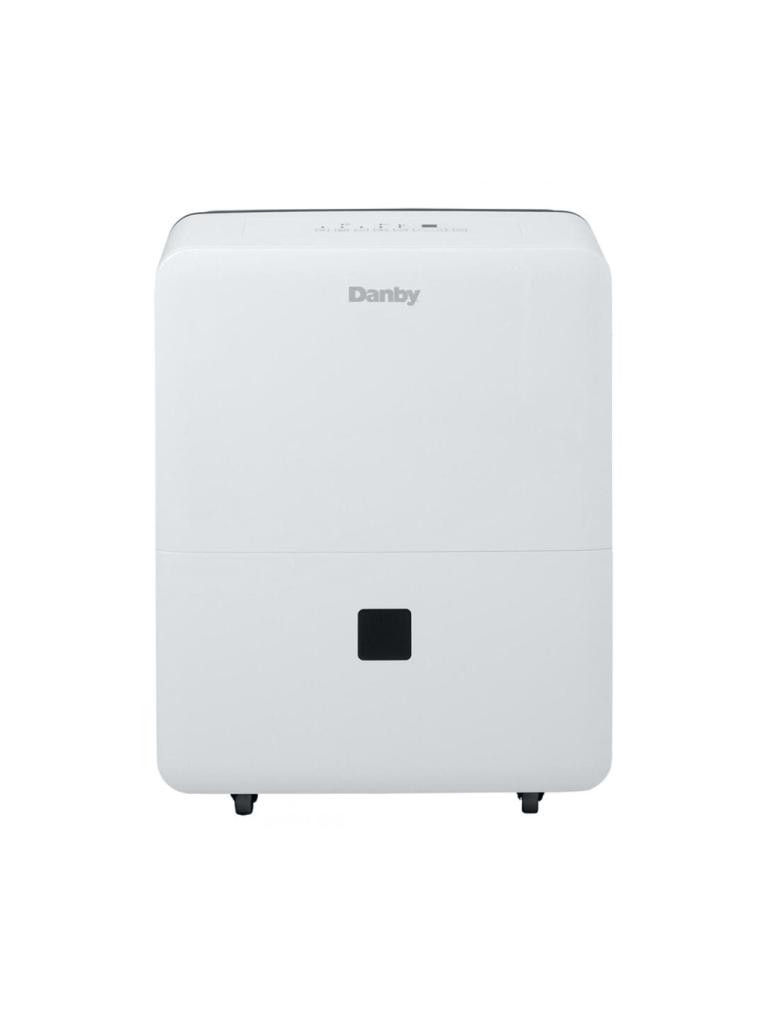
Specifications for DDR020BJ2WDB with owner checks for this product design. Use the matching manual for control sequences and replacement parts.
Specifications & model details
DDR020BJ2WDB: model-specific checks
Use both product and source names
Danby DDR020BJ2WDB is listed under ENERGY STAR partner Danby Products Inc.. Search support by the retail brand and full product code. The partner name helps distinguish the certification record from a similarly named product; it is not a declaration of the current warranty provider.
Use the source-listed product name as well as the code
The source records associate Danby DDR020BJ2WDB with Dehumidifiers. Keep both names in the support lookup. A certification model number and a retail product name can differ; the original source establishes this relationship, while the matching manufacturer document establishes procedure applicability.
Use the unit’s label and official manufacturer information to establish model identity, production timing, and rating context.
Owner guide: Model age & history
Category & symptom guidance
Model age & history
5 minute read · Shared guidance for dehumidifiers
Read the rating label accurately
Look for the rating label on the dehumidifier body and record the complete model and serial numbers. Include letters, separators, and suffixes rather than copying only the prominent model name from the front panel. The label may also show a date code, electrical rating, or manufacturing information. Take a clear photograph and compare the copied characters with it; an O and zero or a one and I can be easy to confuse.
The model identifies a product version, while the serial number often identifies an individual unit. A retailer listing or a similar looking housing cannot establish either number. Keep the label photo even if you are searching for a manual or support page, since manufacturers may ask for it when confirming parts, warranty eligibility, or service records. Avoid inferring an exact age from color, control layout, or styling.
Photograph the complete rating label in good light.
Transcribe model and serial numbers exactly, including suffixes.
Establish production date through official decoding
Some manufacturers publish a serial-number decoder or explain date codes in official support material. Use that explanation only for the brand and product line it covers. Serial formats can differ across makers and change over time, so an internet forum’s interpretation may not apply to your unit. If the manufacturer does not publish a decoder, send the serial number to official support and ask for the production date rather than guessing from a pattern.
Record the source of any date interpretation. A response from the maker or an official document is stronger evidence than a third-party chart. If the code can represent more than one date or production location, ask support to resolve the ambiguity. Keep the answer with the label photograph so a future owner or service provider can see how the age was established.
Use a manufacturer-issued decoder only when it explicitly covers your unit’s code format.
Ask official support to confirm the date if no applicable decoder is published.
Keep production, purchase, and installation dates distinct
A manufacturing date tells when a unit was produced; it does not tell when you bought it or first installed it. A dehumidifier might sit in retail inventory, remain boxed after purchase, or be installed later. For warranty or ownership history, preserve the receipt and note the installation date separately. If purchase records are missing, use an order history, gift documentation, or a dated photograph as supporting evidence, but identify which date each record actually establishes.
When selling a used unit, describe known dates plainly: label date if confirmed, purchase date if documented, and installation period if known. Do not present an estimate as a verified age. This distinction helps a buyer understand the record without treating a serial code as proof of continuous use or storage conditions.
Maintain separate entries for manufacture, purchase, and first-use dates.
Label any estimated date as an estimate and preserve its supporting evidence.
Check whether the model was discontinued
A manufacturer’s product page or support search can show whether a model remains in its current catalog, but an absent listing does not by itself establish a discontinuation date. The company may have reorganized pages or stopped featuring an older product while keeping manuals and parts information available. Search the official support site by exact model number and ask support whether it is discontinued if that fact matters to a repair, replacement, or sale.
For a purchase decision, use the maker’s current documentation for the exact model instead of assuming that a visually similar successor has the same features or service support. If the manufacturer confirms a model’s final sale or support status, save that response and date. Avoid assigning a launch year based solely on archived retailer listings or the styling of the cabinet.
Search official product and support pages using the full model number.
Ask the manufacturer to confirm discontinuation or support status when needed.
Interpret capacity ratings in their test era
A pint-per-day capacity is measured under specified test conditions, and rating procedures can change. ENERGY STAR documents revisions to dehumidifier testing and capacity ratings. As a result, two units with similar advertised pint figures may have been rated under different procedures. Preserve the date and source of a specification when comparing older and newer models, and do not translate old capacity into a newer equivalent with an informal multiplier.
Check the applicable product label, manufacturer specification, and the testing information relevant to that model. If an older listing gives a capacity but does not identify its test basis, mark that detail as unverified rather than treating the number as directly comparable. The unit’s age and its rating era are related clues, but verify the method from official documentation where available.
Record the stated capacity with its source and test basis, if given.
Use ENERGY STAR’s testing history to understand why older capacity figures may not compare directly.
What to do with what you find
The manufacturer’s official decoder explicitly covers the serial format on the label and yields a production date.
The date is supported for this particular code format, though it remains a production date rather than purchase or installation age.
Save the decoder reference and record purchase and first-use dates separately.
An online chart suggests a date, but the manufacturer does not confirm that it applies to this product line.
The code interpretation is unverified and could assign the wrong age.
Ask official support to interpret the complete serial number and retain its written answer.
An older listing gives a capacity figure but no test procedure or rating year.
The figure may not be directly comparable with a current dehumidifier rating.
Check the maker’s specification and ENERGY STAR testing information; label the test basis unknown if it cannot be established.
Have these details ready
Clear photograph of the rating label
Exact model and serial numbers
Manufacturer decoder or written date confirmation
Purchase receipt and installation record
Specification source and capacity test basis
Common questions
Does the serial number tell me how long the owner has used the dehumidifier?
No. A confirmed serial date may indicate production timing, while purchase and first-use dates require separate records.
Can I estimate a model year from its appearance?
Appearance is not reliable evidence. Use an official label, manufacturer decoder, or written confirmation.
General background sources
These sources support the shared guide. Exact model specifications and matched family procedures have their own sources above.