Potential replacements. Compatibility is not guaranteed. Confirm the complete model, suffix, serial/version, diagram position and current part number with the seller or manufacturer before ordering. Seller links open their listings for current price, stock and returns.
We do not have a current, reviewed individual part suggestion for this model. Use the official lookup below with the full appliance label.
Continue with Bosch
Use the full model and version from your appliance label. This link opens the manufacturer’s parts or support site.
How these suggestions are reviewed · Seller links are unpaid. Specs & Parts does not sell these parts or guarantee fit, performance, or a repair outcome.
Guidance for Bosch dishwashers. Check the feature and control descriptions against your model.
Specifications & model details
SPV68C73UC: model-specific checks
Start with the source identity
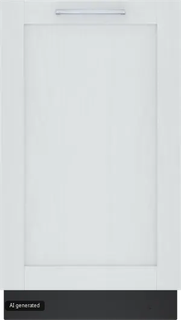
Bosch SPV68C73UC is the exact code in this catalog record. This topic should be evaluated for that code and dishwashers category. The original source record is linked below; unrecorded settings, dates and compatibility remain unknown.
Replace exhausted detergent and rinse aid carefully, and treat broken filter or dispenser parts as model-specific components rather than interchangeable supplies.
Owner guide: Consumable replacement
Category & symptom guidance
Consumable replacement
3 minute read · Shared guidance for dishwashers
Refill one dispenser at a time
Open the detergent cup only when the machine is idle and dry. Remove any damp clumps or residue with a dry cloth so the lid can close and release normally. Add only the dose appropriate to the chosen cycle and water conditions; overfilling can leave residue, while too little may leave food soil behind.
Close the detergent cup until its latch engages. Before loading, verify no utensil or large dish will block the cup door. If the lid stays shut after a completed cycle, first inspect whether an item physically obstructed it and whether detergent remains; do not pry the dispenser open or spray cleaner into its mechanism.
Match dose placement to cycle length
Read the cycle’s detergent directions, especially for short programs and rinse-only programs. A rinse cycle may call for no detergent. On some GE models covered by the GE owner manual for the listed model families, a tablet or packet for a wash under an hour is placed in the prewash compartment or tub bottom, while longer washes use the main cup; this is an example scoped to that manual, not a rule for every dishwasher.
If a tablet remains partly intact, note the cycle, water temperature, and where it was placed. Then check whether dishes blocked the dispenser or whether the product instructions exclude short cycles. Change one condition at a time so the result points to a cause rather than a bundle of guesses.
Refill rinse aid without overfilling
Locate the dedicated rinse-aid reservoir by its marked cap; do not confuse it with the detergent cup or any salt reservoir. Wipe spills from surrounding surfaces and close the cap securely. The refill indicator may be visual or electronic, and not every dishwasher has a rinse-aid dispenser.
If drying remains poor after refilling, assess the drying design and load. Plastics retain water more readily than glass or ceramic, and condensation drying depends on heat stored in dishes and tub surfaces. A model with heated drying or a fan may use a different process. Use the manufacturer’s drying support for the exact design before changing options or buying a product.
Clean reusable filter pieces during service
For a washable filter, remove food into the waste bin before rinsing so scraps do not enter the drain. Warm soapy water and a soft sponge are suitable for routine residue on many designs. Hard-water calcium may need gentle brushing, but avoid a scouring pad that can scratch the mesh or alter its fit.
A two-piece assembly may require its basket to be unlocked from the fine filter, emptied, then locked back in place. That procedure is not universal. Follow the arrows or diagrams molded into the actual component and the owner instructions; do not twist an unidentified piece based on another brand’s layout.
Replace a damaged component precisely
If mesh is torn, a locking tab is broken, or a dispenser cap will not seal, identify the component and appliance model before ordering. Compare the part diagram and the old piece’s shape, not just a product photo. A compatible-looking filter can sit incorrectly and fail to protect the wash system.
Avoid replacing a filter solely because it is discolored; staining may not affect function if the piece is intact and clean. If the assembly will not lock after careful cleaning, stop using it and obtain model-specific guidance. Do not run the dishwasher with a loose filter or a missing cover when the manufacturer requires it.
What to do with what you find
Detergent remains in the cup after the wash.
The dispenser may have been blocked, the product may not suit that cycle, or release may be impaired.
Inspect loading and cycle-specific placement on one comparable load before seeking dispenser diagnosis.
Have these details ready
Model number and photo of damaged component
Cycle used and detergent form/placement
Whether the rinse-aid reservoir is present
Common questions
Can I put rinse aid in the detergent cup?
No. Use only the marked rinse-aid reservoir, if the machine has one.
Should a stained filter be replaced?
Not automatically. Clean it and inspect for tears, broken locks, or a fit problem.
General background sources
These sources support the shared guide. Exact model specifications and matched family procedures have their own sources above.